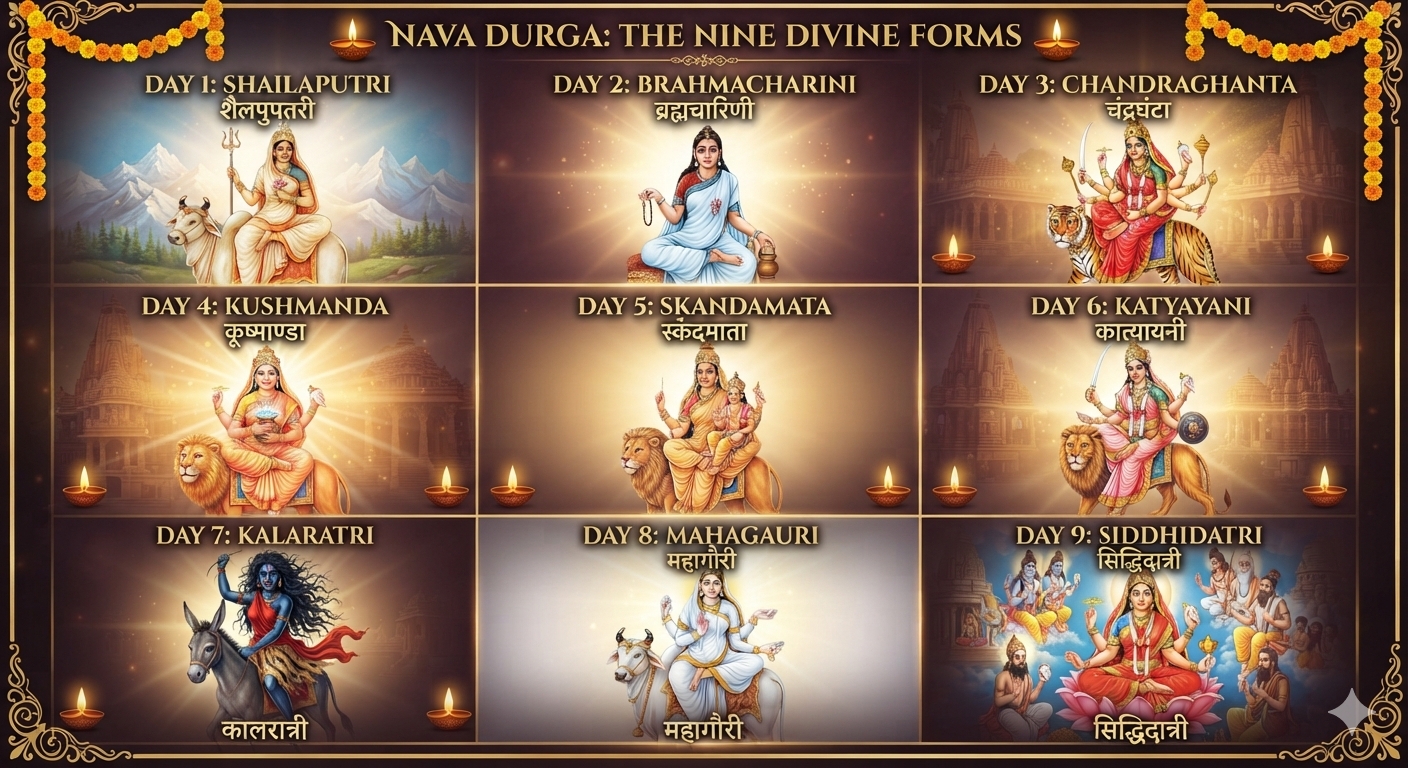
The Nava Durga are the nine distinct forms of Goddess Durga worshipped during the festival of Navratri.
- Shailaputri — The daughter of the Himalayas (mountains) and the first form worshipped.
- Brahmacharini — The devoted ascetic who practices severe penance.
- Chandraghanta — The brave protector adorned with a half-moon shaped like a bell.
- Kushmanda — The cosmic creator who brought forth the universe with her smile.
- Skandamata — The loving mother of Lord Skanda (Kartikeya).
- Katyayani — The fierce warrior goddess born to Sage Katyayana to destroy evil.
- Kalaratri — The dark, fierce destroyer of fear and ignorance (associated with Goddess Kali).
- Mahagauri — The serene, radiant, and pure form of the Goddess.
- Siddhidhatri — The supreme giver of supernatural powers and spiritual fulfillment.
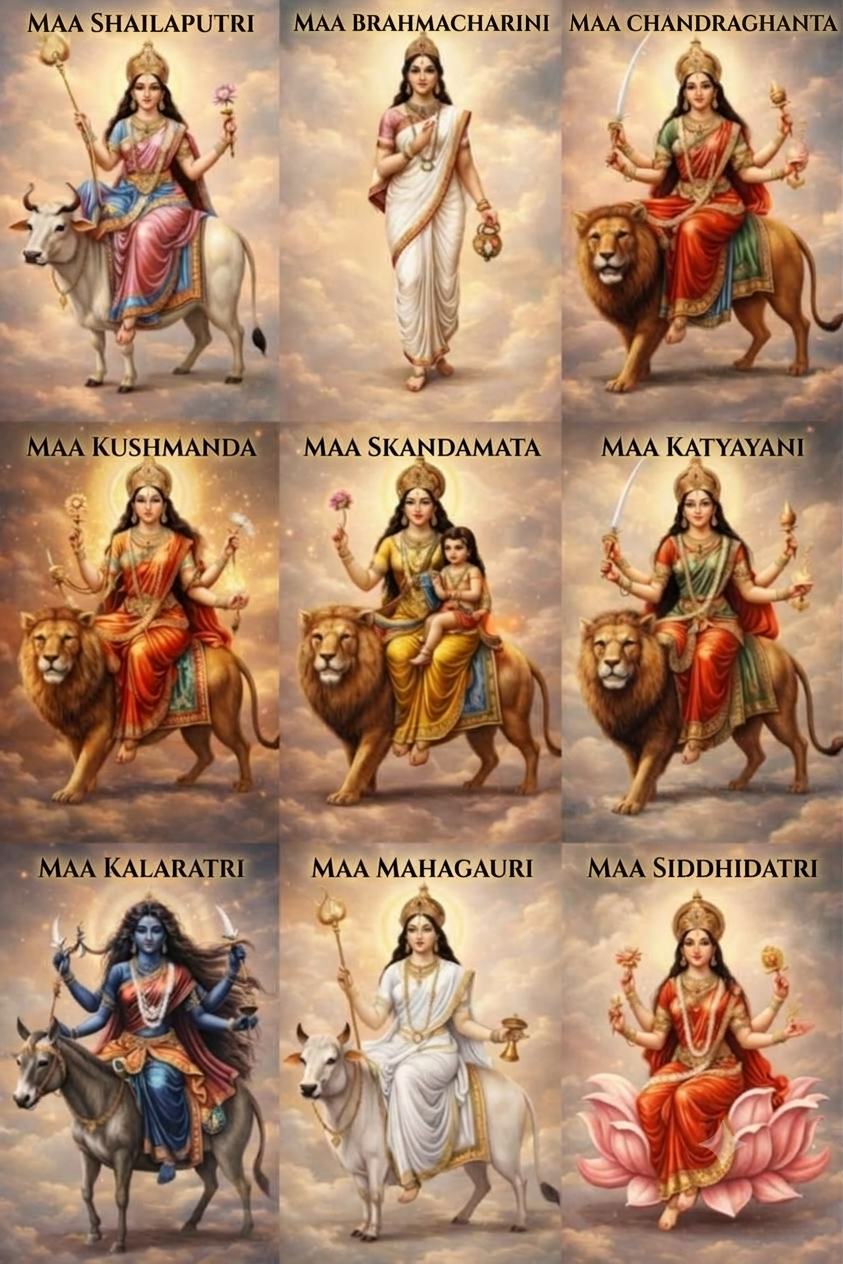
The Nava Durga (Nine forms of Goddess Durga) represent the sequential awakening of the Kundalini Shakti (Divine Cosmic Energy) as it ascends through the human body. During the nine nights of Navratri, a seeker’s consciousness travels from the lowest, physical energy center to the highest, spiritual realm.
The table below outlines the English meanings of the nine forms of Durga and their direct relationship with the 7 Chakras.
Nava Durga & The 7 Chakras Alignment
| Day | Nava Durga Form | English Meaning / Symbolism | Associated Chakra | Spiritual & Psychological Qualities |
| 1 | Shailaputri | Daughter of the Mountain | Muladhara (Root Chakra) | Stability, grounding, and survival. Forms the solid foundation of the spiritual journey. |
| 2 | Brahmacharini | The Ascetic / Pursuer of Sacred Knowledge | Svadhisthana (Sacral Chakra) | Discipline, emotional purity, and creativity. Focuses raw energy into spiritual focus. |
| 3 | Chandraghanta | She Who Has a Crescent Moon Bell | Manipura (Solar Plexus Chakra) | Courage, bravery, and willpower. Dissolves fear and inner anxiety. |
| 4 | Kushmanda | Creator of the Cosmic Egg | Anahata (Heart Chakra) | Love, compassion, and cosmic creation. Expands joy and absolute health. |
| 5 | Skandamata | Mother of Skanda (Lord Kartikeya) | Vishuddha (Throat Chakra) | Communication, discrimination, and nurturing. Refines speech and unlocks higher knowledge. |
| 6 | Katyayani | The Warrior Daughter of Sage Katyayan | Ajna (Third Eye Chakra) | Intuition, inner vision, and discernment. Destroys the ego and clears optical illusions. |
| 7 | Kalaratri | The Dark Night / Destroyer of Ignorance | Sahasrara (Crown Chakra) | Liberation, transformation, and ultimate detachment. Relaxes the mind completely by conquering darkness. |
| 8 | Mahagauri | The Extremely Radiant / Pure White | Integration / Purification of Sahasrara | Purity, serenity, and absolute divine light. The calm, tranquil state achieved after cellular transformation. |
| 9 | Siddhidatri | Giver of Supernatural Powers (Siddhis) | Ultimate Transcendence (All Chakras) | Self-realization and non-duality. Represents the culmination of spiritual growth where the seeker merges with the Divine. |
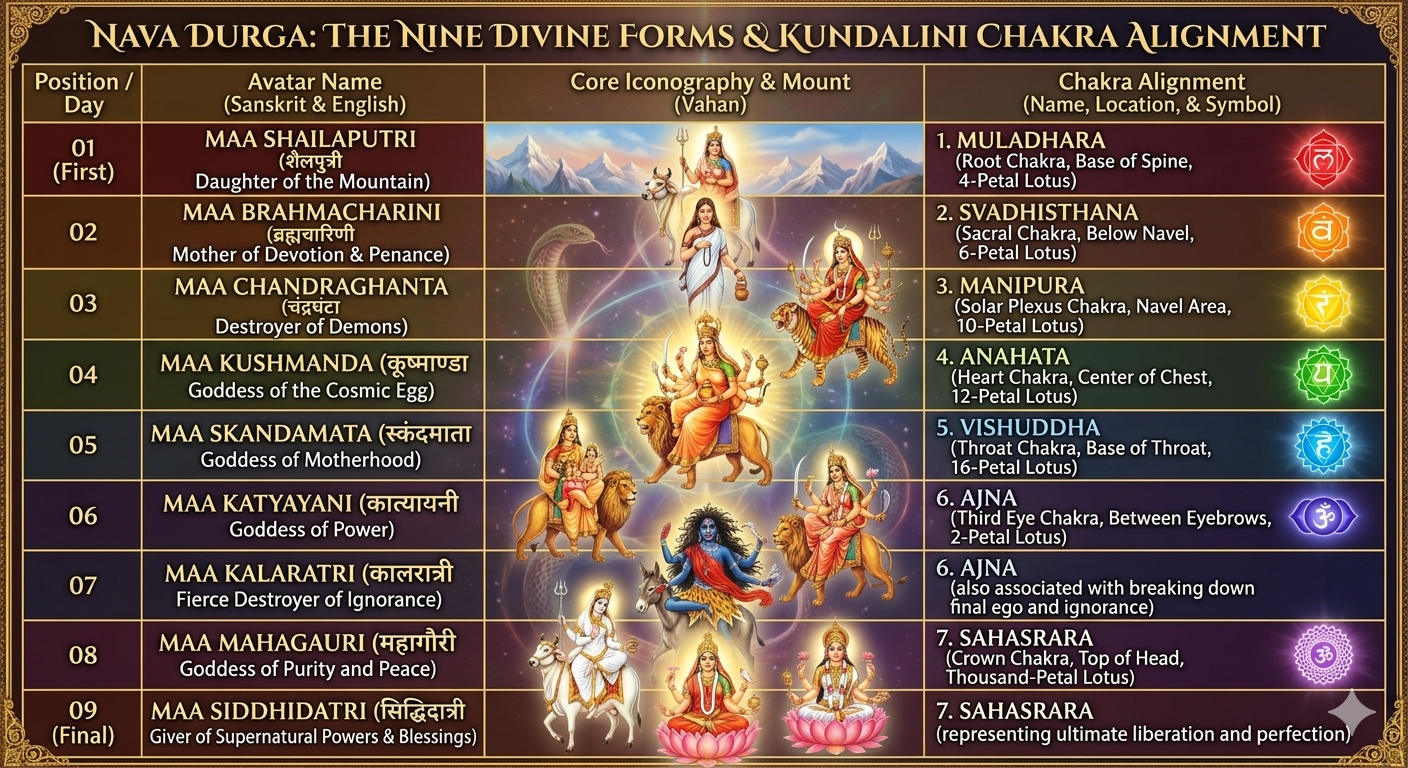
The Spiritual Mechanics of the Connection
- The First Three Days (Days 1–3): Focus on the lower three physical chakras (Muladhara, Svadhisthana, Manipura). This represents taming the animalistic nature, building raw vitality, breaking inertia, and mastering basic human emotions.
- The Middle Two Days (Days 4–5): Move into the emotional and expressive heart and throat centers (Anahata, Vishuddha). Here, energy transforms from survival mechanisms into unconditional love and creative intelligence.
- The Final Four Days (Days 6–9): Elevate into the spiritual centers (Ajna, Sahasrara). The seeker moves past mental noise into pure cosmic consciousness, gaining deep intuition and spiritual liberation (Moksha).